From Basingstoke to Bavaria: Notes from Our Team's Visit to BMW's Homeland
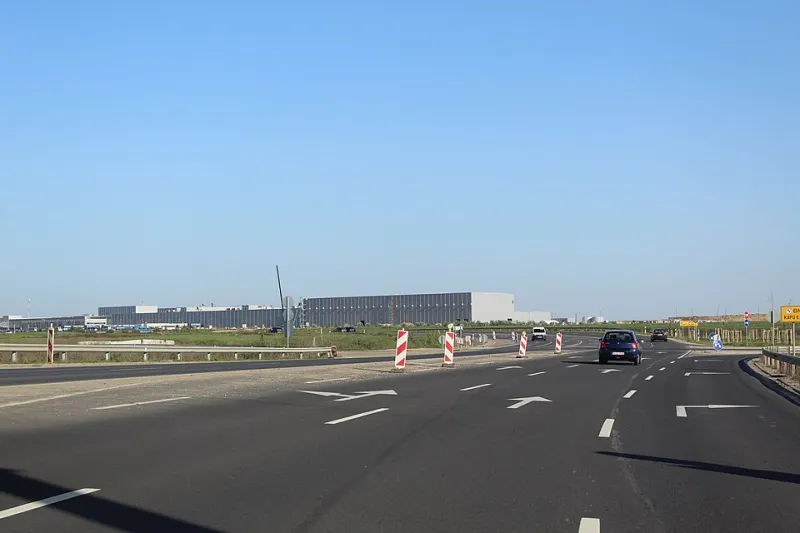
Photo: TrainSimFan, CC BY 4.0, via Wikimedia Commons
There is a moment on the production line at Dingolfing — a vast facility in Lower Bavaria that builds more BMWs than almost anywhere else on earth — when a bare aluminium body shell glides past you, spotless and silent, on its way to becoming a 5 Series. It's easy to feel slightly humbled. Most of us in the motor trade spend our working lives around finished cars. Seeing one assembled from nothing, weld by weld and panel by panel, is something else entirely.
Earlier this month, a small delegation from our Basingstoke team made the trip: a morning at BMW Welt and the group headquarters in Munich, followed by a full day touring the Dingolfing plant. We went to learn. We came back with rather more than we expected.
Munich: Where the Brand Explains Itself
BMW Welt in Munich is part museum, part delivery centre, part statement of intent. For a dealership team, the most valuable hour we spent there wasn't with the cars at all — it was with the people who design and engineer them.
A recurring theme of the conversations was restraint. BMW's engineers spoke at length about the discipline of not adding complexity for its own sake: cooling channels shaped to do two jobs instead of one, cabin materials chosen because they'll age gracefully over a decade of Hampshire winters, not because they photograph well on launch day. That mindset — durability as a design principle rather than an afterthought — is difficult to convey in a showroom conversation, but it underpins nearly everything else about the product.
Dingolfing: Precision at Industrial Scale
The Dingolfing plant is enormous — a small town, effectively, employing tens of thousands of people across multiple halls. Yet the impression it leaves is not of scale but of repetition done perfectly. Robots apply seam welds with a consistency no human hand could sustain, and alongside them, skilled technicians carry out the judgment calls: panel alignment, paint inspection under raking light, final quality sign-offs.
A few details stayed with us:
- Body tolerances measured in fractions of a millimetre. Panel gaps that customers instinctively run a finger along are checked against specifications tighter than a credit card's width.
- Paint depth verified, not assumed. Each body passes through inspection where coating thickness is measured — a small thing that pays dividends years later in corrosion resistance.
- Traceability down to the component. Every significant part on every car can be traced back through its build record. It's the kind of diligence you hope exists but rarely get to see.
- The human element. For all the automation, the final quality gates are signed off by people. That blend of machine precision and human accountability is, arguably, the real BMW manufacturing story.
What It Means Back in Hampshire
It would be easy to file a trip like this under brand theatre. But there's a practical point for buyers in Basingstoke and across Hampshire: the qualities you can't see on a test drive — the material choices, the tolerances, the corrosion protection — are precisely the ones that determine what a car feels like at five and ten years old.
When we hand over an Approved Used vehicle, or take in a part-exchange that's been cared for properly, we're seeing the downstream consequences of those decisions on the production line. Cars that still close with a solid thud. Interiors that haven't betrayed their age. Engineering that was designed to be serviced, not merely sold.
A Standing Invitation
We returned to RG21 with a renewed appreciation for what sits on our forecourt — and, frankly, a few notes we'll be folding into how we present cars to customers. If you're considering a new or used BMW and want to understand what you're actually paying for beyond the badge and the specification sheet, ask us. We've now seen the answers first-hand, and we're always happy to talk about them.
The Black Forest gets the postcards, but Bavaria builds the cars. And a few of them end up very well suited to the roads of Hampshire.