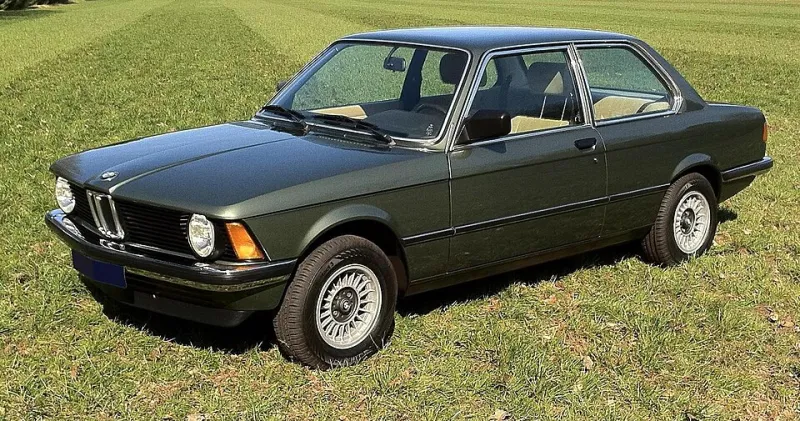
From First Badge to Final Choice: Mapping the BMW Ladder Our Hampshire Customers Climb
Photo: Damian B Oh, CC BY-SA 4.0, via Wikimedia Commons
There is a familiar pattern that plays out on our forecourt in Basingstoke, and once you have seen it a few times, you begin to set your watch by it. A customer arrives looking for their first BMW — often a used 1 Series, sensibly specced, modestly powered. Three years later, they return, a little more confident, a little more particular, and the conversation turns to the 3 Series, or perhaps an X1 for the growing family. By the second or third visit, we are discussing X5s with towing brackets and rear entertainment for the grandchildren.
It is a progression we think of, only half-jokingly, as the BMW ladder. And it tells you a great deal about how these cars hold their owners.
Why the First BMW Rarely Stands Alone
The first purchase is usually a cautious one. Buyers in Hampshire tend to start with something compact and efficient — the 1 Series has long been the natural entry point, with the 2 Series Active Tourer and the occasional X2 rounding out the field. What matters at this stage is not outright performance but the experience: the driving position, the rear-wheel-drive balance (or the convincing imitation of it), the sense that the car was engineered rather than merely assembled.
That experience is precisely what sets the hook. Our service department notices it too — first-time BMW owners who bring their car in for an interim service often leave asking about the larger models in the showroom. Ownership, it turns out, is the best salesperson we have.
The Middle Rungs: Family, Practicality and the X Factor
The second purchase is where pragmatism enters. Children, dogs, and the school run through Old Basing or the commute to Reading reshape priorities. This is where the X3 and X3-rivals in the 3 Series Touring body come into their own, and where buyers become noticeably more discerning about specification. They now know which options matter — adaptive suspension, a proper tow bar, heated everything.
There is a financial dimension here as well. Well-maintained examples of the 3 Series and X3 hold their value remarkably well in the southern counties, where demand from commuters and families keeps the used market brisk. A car with a complete service history and a sensible colour can be worth a meaningful premium over a neglected equivalent — which is exactly why we encourage customers to think of servicing not as a cost but as a deposit on their next car.
Knowing When to Make the Move
The question we are asked most often is not "which car?" but "when?". There is no single answer, but there are reliable signals:
- The warranty horizon. As a BMW passes its fourth or fifth year, major component cover narrows. Trading before significant bills arrive protects both wallet and resale value.
- The mileage inflection. Once annual mileage climbs past 15,000 or so, the arithmetic of running an ageing premium car changes.
- The lifestyle shift. A third child, a caravan, a new job in the city — these reshape requirements faster than any service schedule.
- The market moment. Used values move with the seasons and the economy. A well-timed part-exchange in spring, when demand traditionally rises, can be worth hundreds of pounds.
The Top of the Ladder
The final rung looks different for everyone. For some it is an X5 or a 5 Series saloon — the reward car. For a growing number, it is an iX or i5, as Hampshire's charging infrastructure matures and electric motoring becomes the practical choice rather than the experimental one. What unites these buyers is confidence: they know what they want because they have owned BMWs before.
If you are standing at the bottom of that ladder, eyeing your first used 1 Series, take it from those who have climbed it: choose well, service faithfully, and the next rung will still be there when you are ready. And when that moment arrives, you will find us on the A30, ready to talk about what comes next.