Clicks, Whines and Thumps: A Technician's Guide to BMW Noises on Hampshire Roads
Cars communicate. Long before a warning light appears, a BMW will usually have said something about a worn bush, a tired bearing or a brake pad nearing the end of its life. The difficulty is that a modern car also makes a great many noises that mean nothing at all, and distinguishing one from the other is where most drivers understandably hesitate.
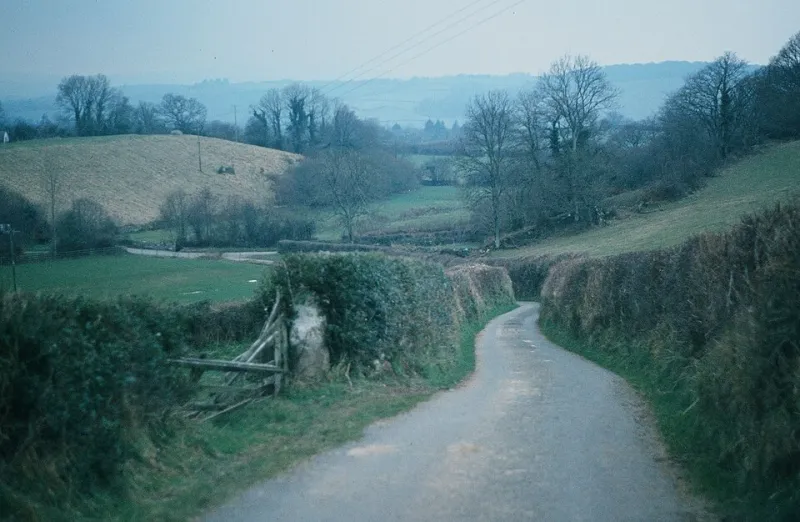
Hampshire's road surfaces do not help. The coarse sections of the M3, the concrete stretches and repaired patches on the A339, the relentlessly uneven ring road around Basingstoke and the narrow, cambered lanes toward Old Basing and Bramley all produce their own soundtrack. Some of what you hear is the road. Some of it is the car.
Five sounds that are business as usual
Tyre roar on coarse tarmac
A deep, even rumble that rises and falls with road surface rather than engine speed is almost always tyre noise. It is louder on certain brands, more pronounced on larger wheels with lower-profile tyres, and entirely normal. If the volume changes sharply when you move from one surface to another, the road is the cause, not the car.
Brake squeal after a damp night
A brief squeal on the first few applications of the day, particularly after rain or a cold night, usually reflects a thin film of surface rust on the discs. It clears within a handful of stops. Persistent squealing that continues through a journey is a different matter and worth investigating.
A light ticking from the engine bay
Modern petrol engines use high-pressure direct injection, and the injectors tick audibly at idle. Diesel engines have their own characteristic clatter. A steady, rhythmic tick that fades as the engine warms and does not change with road speed is typically injector or valvetrain noise rather than a fault.
The cooling fan running after switch-off
On a warm day, after a slow queue or during a diesel particulate filter regeneration, the fan may continue for several minutes after the engine stops. A hot, slightly acrid smell alongside it is also normal during regeneration. Neither should be confused with overheating.
A creak from the suspension on cold mornings
Rubber bushes stiffen in low temperatures, and a faint creak as the car settles over speed humps in January is common and usually harmless. If the creak becomes a knock, or appears only when turning, the diagnosis changes.
Five that warrant a booking
A whine that rises with road speed
A hum or whine that increases in pitch as you accelerate, and which changes or disappears when you steer gently one way or the other, points toward a wheel bearing. It is one of the most commonly missed faults because it develops slowly and is easy to attribute to tyres. A bearing left too long becomes a safety matter rather than an inconvenience.
Grinding or metal-on-metal braking
Brake pads have a wear indicator, but a grinding sensation through the pedal means the friction material has gone and the backing plate is contacting the disc. This should be assessed promptly. Continuing to drive rarely improves the position and usually adds the cost of new discs to the cost of new pads.
A clonk over the ring road's imperfections
A single, dull knock when the car passes over a pothole or a repaired trench is often traced to worn anti-roll bar bushes, drop links or tired top mounts. It is rarely urgent but almost always progressive, and addressing it early keeps the repair modest.
A rhythmic hum or vibration
Vibration felt through the floor, the seat or the steering wheel at a particular speed band can indicate a tyre with a flat spot or internal damage, a wheel out of balance, a bearing or, less commonly, a drivetrain issue. If the vibration persists after a balance check, further investigation is warranted.
A squeal or chirp from the engine bay
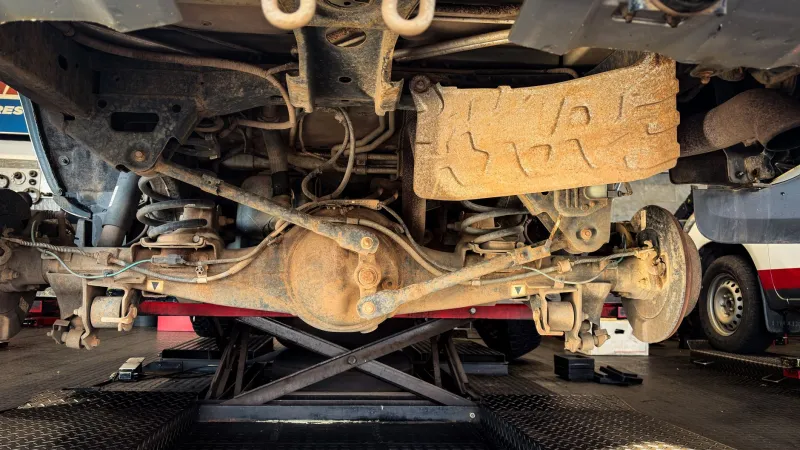
A continuous squeal that follows engine speed, rather than road speed, may indicate a worn auxiliary belt or tensioner. A whistle or chirp that appears only under acceleration on a turbocharged car deserves a look too, as does any new rattle from beneath the vehicle at idle, which may be a heat shield.
Describing a noise so the workshop can find it
A booking that says only that the car is making a noise often results in a technician searching for something that could have been found in ten minutes with better information. Four details transform a description: when it happens, whether it tracks engine speed or road speed, whether temperature affects it, and what you were doing at the time.
A sentence such as the car hums between 40 and 50mph, louder when turning left, unchanged by braking is worth more than a paragraph of adjectives. If you can safely record a short clip with a phone, do so. Note the road you were on when you heard it; some noises are surface-specific.
Why a road test with a technician helps
Many sounds cannot be reproduced in a stationary inspection. A technician who drives the car on the route where the noise appears, with you in the passenger seat, can often identify the source within minutes and confirm it on a ramp afterwards. This is quicker and less expensive than replacing components on suspicion.
It also prevents the opposite error: replacing something that was never faulty. A surprising proportion of workshop time is spent diagnosing noises that turn out to be a loose item in the boot, a stone trapped in a brake shield or a child's toy beneath a seat.
The short version
Treat sound as information rather than alarm. Steady tyre roar, first-stop brake squeal, injector tick and a cold-morning creak are ordinary. A whine that follows road speed, grinding brakes, a knock over rough surfaces, a persistent vibration or a belt squeal are the ones to put in the diary. Describing them accurately, and where necessary demonstrating them on a short drive, is the fastest route to an accurate answer.